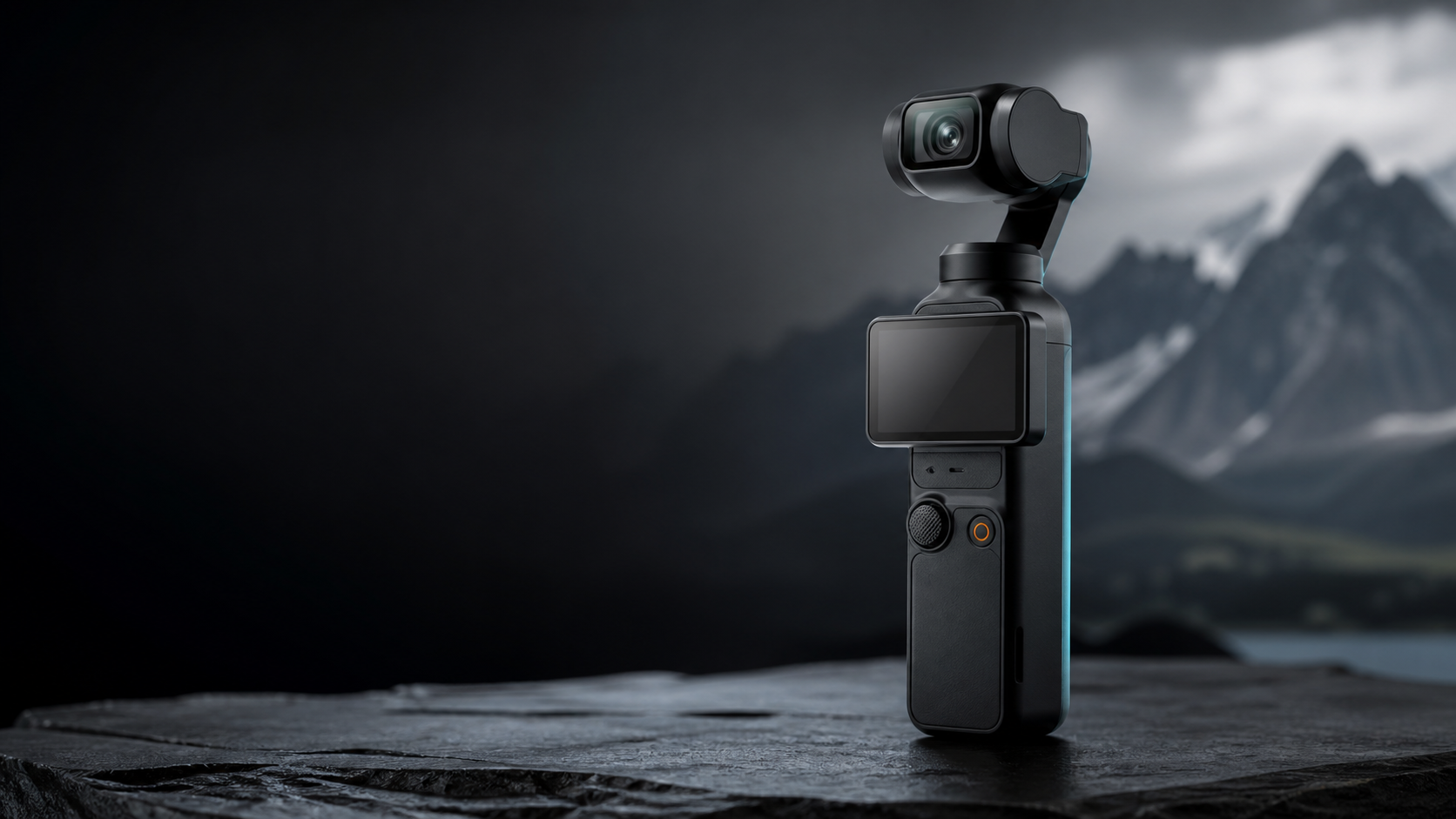
Fast answer: Osmo Pocket 4P matters because it changes the Pocket family from a one-camera recommendation into a clear three-tier ladder. Osmo Pocket 4P is not automatically the best choice for everyone. It is the branch for creators who can justify waiting for stronger framing and a more premium workflow.
On May 14, 2026, DJI officially debuted Osmo Pocket 4P at Cannes. On May 15, 2026, DJI published the related announcement and confirmed that pricing and configurations would be announced later. On May 16, 2026, this site was updated to reflect that new status and to align the decision framework with the iFanr buyer guide article.
Osmo Pocket 4P now has a cleaner status than it did earlier in the week. DJI officially debuted the device at Cannes and described it as part of a more cinematic handheld direction. What DJI did not do yet is just as important: it did not publish final pricing or configurations. That means Osmo Pocket 4P should be treated as official, but not yet fully purchase-ready in every region and every budget scenario.
Why Osmo Pocket 4P changed the conversation
The iFanr article gets one thing exactly right: the main change is not an isolated spec. The main change is that the Pocket line now has separation. Pocket 3 can become the budget gatekeeper. Pocket 4 can become the mainstream all-rounder. Osmo Pocket 4P can become the creator model for people who want native tighter framing rather than a purely wide-first camera. That difference is easier for buyers to understand than a generic "new version" story.
The strongest creative reason to care about Osmo Pocket 4P is framing. Wide cameras are great for travel, selfies, room context, and family clips. They are less ideal when you want to isolate a speaker across a table, tighten up a stage shot, or make a portrait feel more intentional. The article argues that a 3x-style camera is a meaningful creative jump, not just a specification. DJI's own Cannes announcement also leans into portrait, zoom, and cinematic storytelling language. That is why serious buyers are watching the product so closely.
Who should wait for Osmo Pocket 4P
You should wait for Osmo Pocket 4P if your content frequently includes interviews, portraits, ceremonies, conferences, concerts, product demos, or documentary-style B-roll. These are the situations where tighter framing changes the result instead of merely changing the spec sheet. You should also wait if you already own Pocket 3, Pocket 4, or another usable camera. Existing gear lowers urgency and gives you time to compare real footage rather than launch promises.
You should also wait for Osmo Pocket 4P if your buying process is kit-based instead of camera-only. The total cost of a creator setup includes the main camera, microphone, filters, case, tripod, battery accessories, and spare storage workflow. Because DJI has not announced final pricing and configurations yet, patient buyers still need to see whether the eventual 4P kit lands in a sensible range for their use case.
Who should not wait
Do not wait for Osmo Pocket 4P if your need is immediate. If you have a trip, paid shoot, graduation, family event, or content deadline inside the next few weeks, Pocket 4 is the safer path because it is already in market with known bundle options. A camera you can practice with now is usually more useful than a premium camera that still has pricing and package questions attached to it.
Do not wait for Osmo Pocket 4P if your actual work is mostly wide travel clips, simple social content, family video, and casual daily capture. In that case, the practical gain from the more premium model may be smaller than the hype implies. The iFanr article is explicit that most ordinary users are still better aligned with Pocket 4. That is an important restraint, and this guide agrees with it.
The iPhone question is now central
The article's most useful section is not a spec leak. It is the buying question: if you already have an iPhone, do you still need Pocket? The right answer is not always yes. The right answer depends on interruption, heat, storage pressure, handling, and whether you want a dedicated camera that does only one job. If your phone can shoot cleanly, rarely overheats, and does not get in the way, waiting or skipping the purchase can be rational.
If your phone keeps taking calls during recording, runs low on storage, gets hot in summer, or feels awkward for longer clips, a Pocket camera still makes sense. Pocket is a dedicated filming tool. It does not have to protect your battery for messaging, maps, and work. That is why the buying path is now four-way rather than two-way: keep using iPhone, buy Pocket 3, buy Pocket 4, or wait for Pocket 4P.
- Did your phone interrupt a shoot in the last three months?
- Did storage limits make you stop filming or lower your video quality?
- Did heat, lag, or battery drain make your phone unreliable for video?
If your answer is no across the board, you may not need any Pocket camera right now. If the answer is yes and you mostly want convenience, Pocket 3 or Pocket 4 becomes easier to justify. If the answer is yes and you also want more serious framing control, Pocket 4P becomes the model worth tracking.
What still needs confirmation
Even though Osmo Pocket 4P is official, buyers should still verify the boring details before spending money. Final regional price matters. Final configurations matter. Retail timing matters. Warranty path matters. Review sample footage matters. The official announcement says price and configurations are still coming later. That means the correct buyer stance is excitement plus discipline. Treat launch positioning as a starting point, not a checkout screen.
Bottom line
Osmo Pocket 4P is now real enough to anchor a serious buying conversation. The question is no longer "does it exist?" The question is "does your work justify waiting for it?" If you want stronger portrait framing, tighter subject isolation, and a more creator-first Pocket workflow, yes, Osmo Pocket 4P is the model to watch. If you need a stable, practical Pocket camera right now, Pocket 4 remains the easier recommendation.