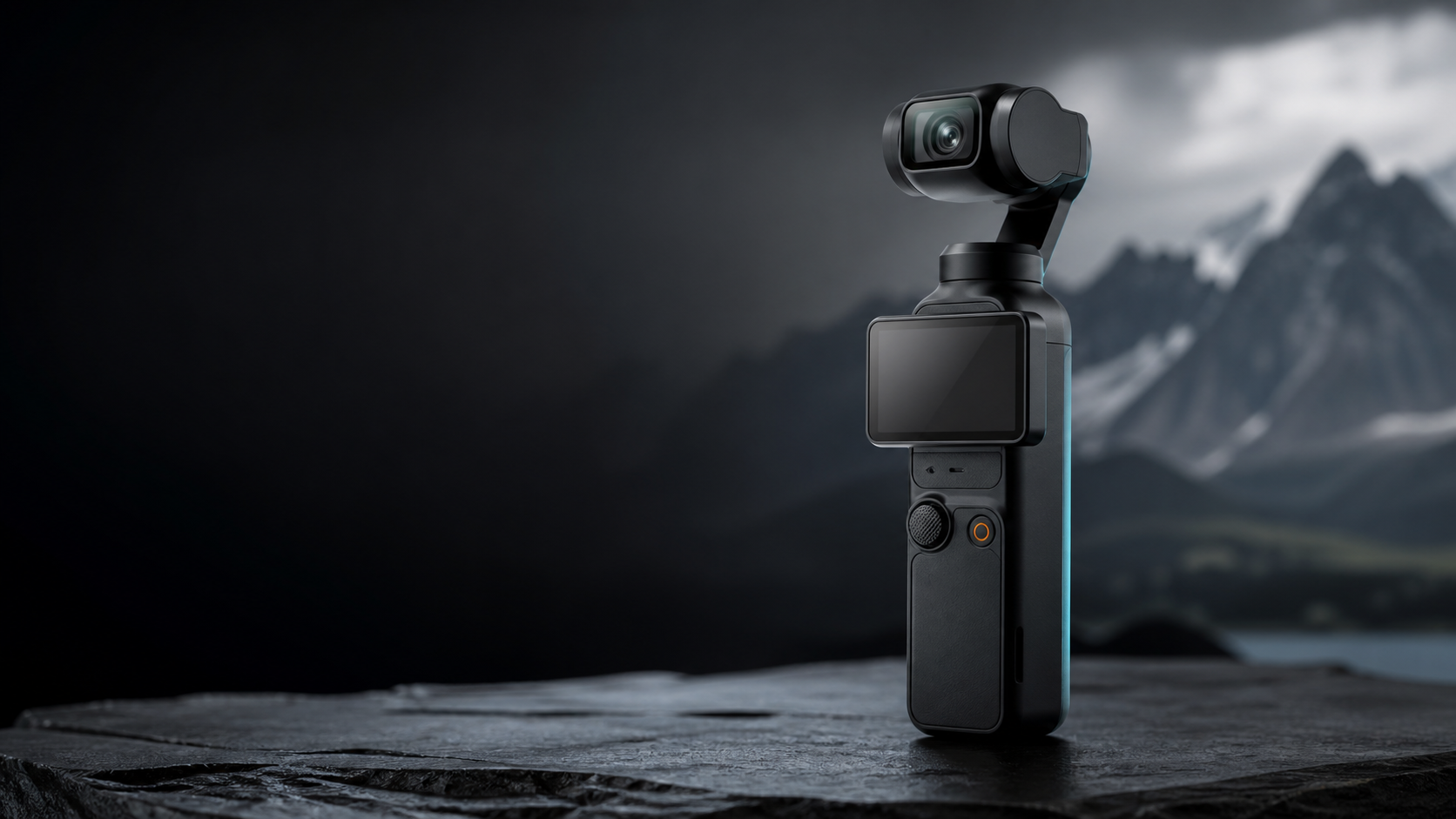
Fast answer: Pocket 4 vs 4P is now a real buyer comparison, not a rumor page. Pocket 4 wins on certainty, broad usefulness, and current availability. Pocket 4P wins on premium intent, tighter-framing promise, and creator-first positioning.
The reason Pocket 4 vs 4P is useful now is that the family finally has separation. The iFanr article describes Pocket 4 as the rational choice for most ordinary users and Pocket 4P as the answer for creators who specifically want a stronger optical-framing workflow. DJI's official Cannes announcement supports that direction by emphasizing portrait, zoom, cinematic depth, and professional storytelling language. Together, those sources create a cleaner Pocket 4 vs 4P split than the site had before.
Pocket 4 vs 4P table
| Factor | Pocket 4 | Pocket 4P | Decision impact |
|---|---|---|---|
| Status | Live product Retail pages and bundles exist today. | Official debut Price and configurations still pending. | Certainty still favors Pocket 4. |
| Everyday value | Strong all-rounder with 2x lossless zoom and 107GB storage. | Likely stronger for creator-specific framing. | General users stay with Pocket 4. |
| Portrait and telephoto appeal | Good enough for daily work, but not the main story. | Main reason buyers care about Pocket 4 vs 4P. | If tighter framing matters, 4P becomes compelling. |
| Commercial clarity | Known current market product. | Still waiting on full price and package details. | Risk-sensitive buyers stay with Pocket 4. |
Why Pocket 4 still wins for many buyers
For most people, Pocket 4 vs 4P is not a fair fight because the needs are not equally advanced. Most buyers want a dedicated camera that fits in a pocket, stabilizes walking shots, gets off the phone, and can be bought right now. That is still Pocket 4. It already has known bundles, known accessories, and a simple retail path. The more your work looks like travel, family, city walks, casual creator clips, or quick business content, the more Pocket 4 vs 4P resolves in favor of Pocket 4.
Pocket 4 also benefits from being the camera you can practice with before your next meaningful shoot. That matters more than spec inflation. In the real world, Pocket 4 vs 4P is often decided by timing and familiarity, not by a future optical advantage that may or may not justify waiting in your specific case.
Why 4P exists anyway
The best argument for the premium lane is that Pocket 4 vs 4P is not only about convenience. It is about look. The iFanr article argues that a tighter 3x-style camera gives you more human-feeling framing, cleaner backgrounds, and more flattering subject isolation. DJI's official statement also leans hard into portrait and cinematic language. If that holds up in review footage, then Pocket 4 vs 4P becomes a creative question rather than a simple feature checklist.
This matters for interviews, event speakers, ceremonies, products on a shelf, restaurant plates, street details, and documentary inserts. The more your work benefits from subject compression, the more Pocket 4 vs 4P stops being a casual shopper's debate and becomes a professional workflow decision.
The iPhone question is now central
The article's most useful section is not a spec leak. It is the buying question: if you already have an iPhone, do you still need Pocket? The right answer is not always yes. The right answer depends on interruption, heat, storage pressure, handling, and whether you want a dedicated camera that does only one job. If your phone can shoot cleanly, rarely overheats, and does not get in the way, waiting or skipping the purchase can be rational.
If your phone keeps taking calls during recording, runs low on storage, gets hot in summer, or feels awkward for longer clips, a Pocket camera still makes sense. Pocket is a dedicated filming tool. It does not have to protect your battery for messaging, maps, and work. That is why the buying path is now four-way rather than two-way: keep using iPhone, buy Pocket 3, buy Pocket 4, or wait for Pocket 4P.
- Did your phone interrupt a shoot in the last three months?
- Did storage limits make you stop filming or lower your video quality?
- Did heat, lag, or battery drain make your phone unreliable for video?
If your answer is no across the board, you may not need any Pocket camera right now. If the answer is yes and you mostly want convenience, Pocket 3 or Pocket 4 becomes easier to justify. If the answer is yes and you also want more serious framing control, Pocket 4P becomes the model worth tracking.
Who should pick which
Use this summary. If you need a camera now, pick Pocket 4. If you need the cheapest sensible entry, consider Pocket 3. If you need creator-level framing and can wait, track 4P. If your iPhone is already enough, keep using iPhone. That is the most honest outcome of Pocket 4 vs 4P after the Cannes debut.
Bottom line
Pocket 4 vs 4P is now a real market split. Pocket 4 is the dependable mainstream answer. Pocket 4P is the premium creator answer that still needs final commercial details. Use urgency, framing need, and phone pain points to decide which side of Pocket 4 vs 4P you are actually on.